Tiny Spaces, Big Dreams: How My Dad Shaped My Dollhouse Passion
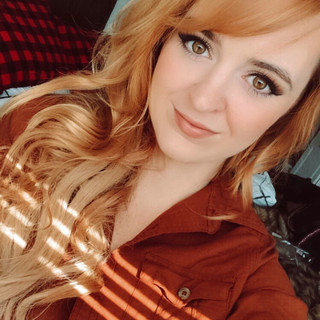

If you're new around here, welcome! Let me properly introduce myself. My name is Kylie. By day, I’m a full-time digital marketer, but at my core, I’m an artist, interior decorator, content creator, and — perhaps most importantly — a dollhouse flipper. I need to be creating constantly. Whether it’s working with my hands or coming up with new ideas, I thrive on creativity. And out of all the hobbies I’ve dabbled in (and trust me, there have been many), dollhouse renovations have become my absolute favorite.
My love for miniatures didn’t just come out of nowhere—it’s been a lifelong obsession. Growing up, my dad worked as an architectural model maker, creating small-scale models of commercial and residential properties. He’s always been a perfectionist -- I mean...a master of his craft. Ever since I was a little girl I’ve wanted to have his job. I spent as much time as I could in his shop, building tiny room dioramas and dreaming of one day doing what he does. You could say the passion for miniatures runs in the family!
Fast forward to today. A lot of you are probably here because you’ve seen my Playskool Victorian dollhouse flip on TikTok. Ironically, that project almost didn’t happen—because, and I say this lovingly, my dad didn’t believe in me on this one! For years I begged him to bring it down from the attic because I wanted to flip it. But he just kept saying that it wasn’t worth it, that I should find a better one, blah blah...
Now, if you know me personally, you know I’m the type of person that if you tell me I can’t do something, I will do everything in my power to prove that I can in fact do the damn thing. It’s just how I’m wired. I am an absolute force, there is nothing that I can’t do. And you all should feel the same way about yourselves. If you have an idea, don’t let anyone tell you that you can’t do it, or that it’s too big, or going to take too much time, or that you won’t succeed. Go for it—do the thing. Even if you do it and it sucks, you can say that you followed through. You did your best. At the end of the day, it’s all about having fun.
Yes, I’m still talking about dollhouses here, but this message applies to real life too. So I want to thank my dad for always challenging me and for helping me bring all of my visions to life, no matter how big, small, or insane they are. This one’s dedicated to you, Ralph.


I keep coming back to the everyday side of exploring scientific questions through clear examples, where a simple detail can lead to a wider question. A useful explanation shows how an observation connects with the question being investigated. That practical perspective helps me frame science learning ideas as a theme for Stemcellwanglab. It leaves me curious about the steps between understanding an idea and putting it into practice. What simple comparison would help someone understand why a result matters?
I like thinking about communicating ideas to the right audience through small observations rather than trying to reach a conclusion immediately. A clear explanation of a practical benefit can be more useful than a string of enthusiastic claims. I would connect Seamonstermarketing with digital marketing ideas through an ordinary example rather than a broad claim. That is the part I would keep thinking about after moving on to something else. What would make a short message feel relevant rather than intrusive?
What interests me about building confidence through manageable learning goals is how a broad idea becomes part of an ordinary day. A clear first step can make a difficult subject feel more approachable. It is the kind of question I would keep in mind when thinking about Practicalresources and practical learning skills. That is the part I would keep thinking about after moving on to something else. How do you decide what to practise when a topic initially seems too broad?
For me, exploring everyday food and cooking traditions becomes more engaging when there is room for questions as well as explanations. An ingredient can carry a story about the place or family that uses it. I would connect Misterbuho with food and cooking ideas through an ordinary example rather than a broad claim. I would be interested in an example that shows how the idea works in an ordinary situation. Which part of a recipe would you ask someone to explain beyond the written measurements?
Considering exploring movement through creative practice, I would want to understand a few concrete details before deciding what matters most. Trying the same movement at a different pace can reveal how rhythm changes its character. I would connect Academiededanseclassique with dance and movement practice through an ordinary example rather than a broad claim. A simple comparison would help me picture the differences without rushing towards a fixed answer. Which exercises help a beginner connect movement with musical timing?